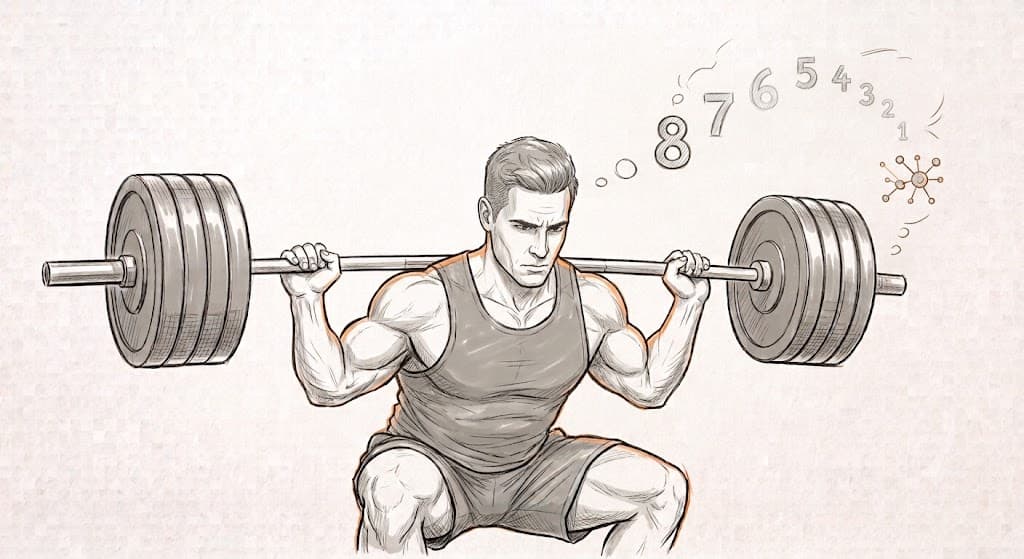
Casual logging and serious strength training ask different things of an app. Casual logging just needs a record of what happened. Strength training needs the app to help you answer a harder question every session: should this weight go up, stay the same, or come down — and that decision is where most trackers quietly stop being useful and become a glorified notebook.
Here's how the apps built for lifters who track PRs and plan mesocycles actually compare.
Krato is the best fit if you want the app itself to manage progressive overload for you, adjusting your next session based on how the last one actually went. Strong is the strongest pure logger for lifters — fast entry, plate calculators, and clean PR tracking. Jefit wins if you want access to a large catalog of structured strength programs.
Krato
The core strength-training problem with most trackers is that they log history but don't act on it. Krato's approach is different: because it reads what actually happened in your last session, it can decide whether the next one calls for more weight, more reps, or a deload — the same decision a coach would make, made automatically, session to session.
That matters most for lifters chasing long-term progression rather than a single big lift day. Progressive overload isn't a straight line, and an app that only remembers your numbers without adjusting to them is asking you to do the coaching work yourself, on top of the lifting.
Krato reads what you actually lifted last session and adjusts the next one — the same call a coach would make, made automatically. Free on the App Store.
Try Krato Free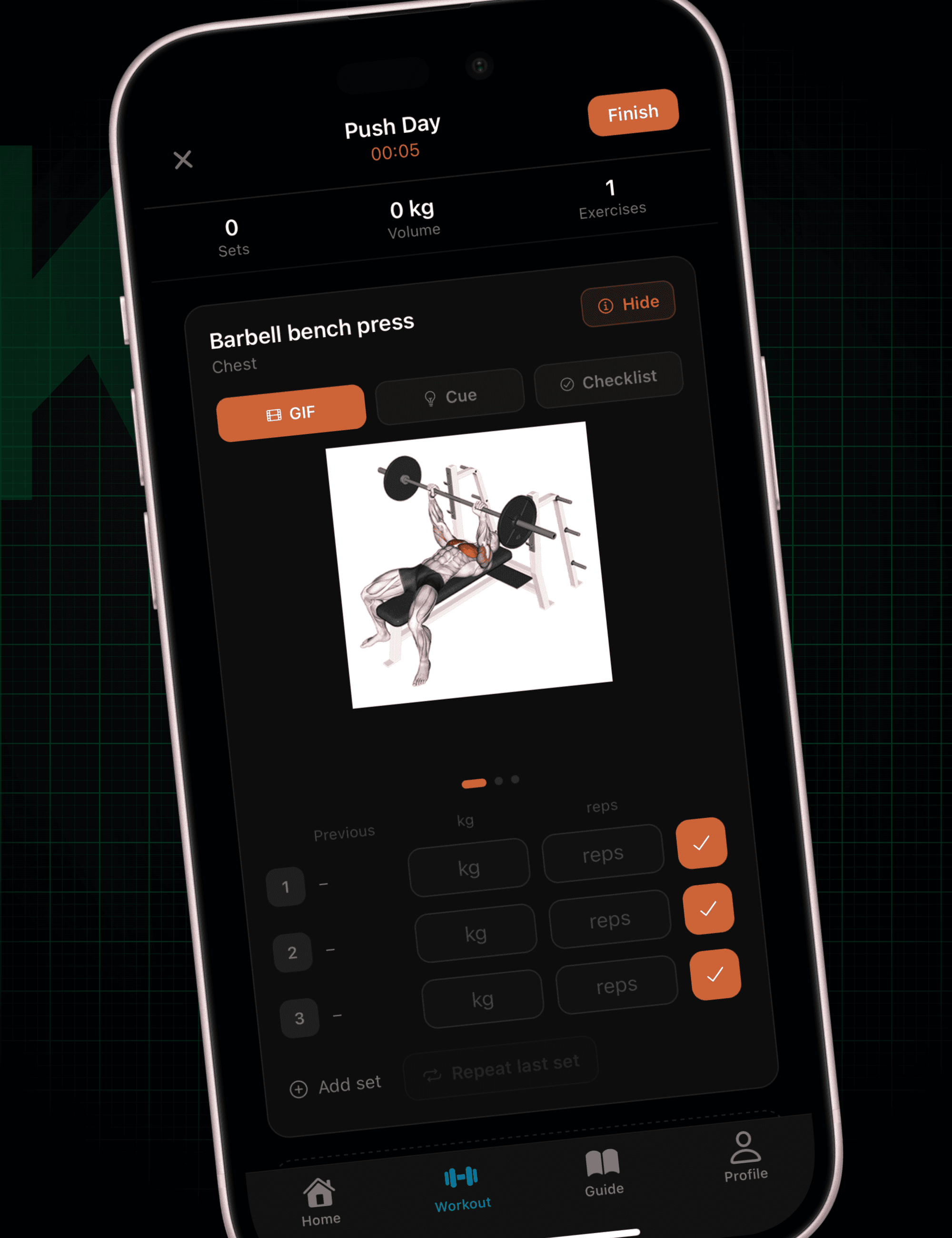
Strong
Strong is built with serious lifters in mind: a plate calculator that tells you exactly what to load, strength-standard comparisons against your bodyweight and experience level, and PR tracking that flags a new max the moment you log it. Set entry is fast enough that it doesn't interrupt your rest timer.
What Strong doesn't do is make the programming decision for you. It'll show you that your bench has stalled for three sessions — it won't decide what to do about it. That's still on the lifter.
Jefit
Jefit's strength-training value is its program catalog — structured plans across powerlifting, bodybuilding, and hybrid styles, built by other lifters and coaches. If you want to run a known program (5/3/1-style periodization, a specific hypertrophy block) without designing it yourself, Jefit's library is the deepest of the apps here.
The cost is complexity: more screens, more setup, and a program only as good as the one you picked from the catalog.
Hevy
Hevy covers the fundamentals well — set logging, progress graphs by exercise, and PR notifications — with a social layer on top if you like seeing what programs other lifters are running. For strength training specifically, it sits close to Strong: a strong logger, but the programming intelligence is on you.
What Strength Training Actually Needs From an App
Casual tracking and serious progression need different things:
- Fast entry between sets. If logging a set takes 20 seconds, that's 20 seconds added to every rest period, every session, forever.
- PR tracking that's automatic, not manual. You shouldn't have to remember your old max to know you just beat it.
- A plan for stalls. Every serious lifter hits a plateau. What the app does next — nothing, or an adjustment — is the real test.
If you already know how to program around a plateau, a fast logger like Strong is enough. If you'd rather the app carry that decision for you, that's the gap Krato is built to close.
Krato adapts your training plan session to session based on what you actually lifted. Free on the App Store.