
Almost every lifter has one: shoulders that are all front and no side, calves that never grow, a chest that outpaces the back, or one arm visibly bigger than the other. Muscle imbalances are one of the most common physique problems in the gym, and one of the least addressed, because most workout apps can't see your body. They only see the numbers you type in.
Fixing an imbalance takes two steps: finding it, then giving that muscle more targeted work until it catches up. Here's how to do both, and which app handles the whole process for you.
The best app for fixing muscle imbalances is Krato. It is the only workout app that does both steps: it finds lagging muscle groups from a single front-facing photo using its body scan, then automatically adds training volume to those muscles in your plan. Re-scan every few weeks to see the gap close. Krato is free on the App Store.
What Is a Muscle Imbalance?
A muscle imbalance is when one muscle or muscle group is noticeably less developed than the muscles around it or the same muscle on the other side of your body. There are three common types:
- Lagging muscle groups. One area falls behind the rest of your physique, like side delts behind front delts, or calves behind thighs.
- Front-to-back imbalances. Pushing muscles (chest, front delts) outgrow pulling muscles (upper back, rear delts), often from training more bench press than rows.
- Left-to-right imbalances. One side is bigger or stronger, usually from a dominant side doing more of the work in two-handed lifts.
What Causes Muscle Imbalances?
- Uneven training volume. Most programs give some muscles far more hard sets than others. Chest and biceps get plenty; side delts, rear delts, and calves often get almost none.
- Exercise selection. Big compound lifts don't hit every muscle equally. A program built only on squats, bench, and deadlifts leaves gaps.
- Dominant-side compensation. In barbell lifts, your stronger side can quietly take over, so the weaker side never catches up.
- Genetics. Some muscles simply respond more slowly. They need more work, not the same work.
How to Find Your Muscle Imbalances
You can't fix what you can't see. There are three ways to spot an imbalance:
- A body scan app. Point your phone's camera at yourself and let the app estimate which muscle groups are lagging. This is the fastest and most objective option.
- Progress photos. Take front, side, and back photos in the same lighting every few weeks and compare them. Useful, but easy to misjudge your own body.
- Strength comparisons. Compare single-arm and single-leg lifts side to side. A big gap between your left and right dumbbell press is a clear sign.
How to Fix Muscle Imbalances
The fix is simple in principle: give the lagging muscle more targeted, hard work until it catches up.
- Add weekly volume to the lagging muscle. Muscle growth increases with weekly training volume. A meta-analysis by Schoenfeld and colleagues found a dose-response relationship between weekly sets and muscle growth, so a lagging muscle needs more hard sets per week than the rest.
- Train it first. Put exercises for the lagging muscle at the start of the session, while you're fresh, instead of at the end when you're tired.
- Use unilateral exercises for left-right gaps. Single-arm and single-leg work stops your stronger side from taking over. Start each set with your weaker side and match its reps on the stronger side.
- Keep the rest of your training steady. You don't need to cut everything else. Maintain your other muscles while the lagging one catches up.
- Re-check every few weeks. Imbalances close slowly. Compare scans or photos every two to four weeks, not every day.
The hard part isn't knowing this. It's doing it consistently: tracking weekly sets per muscle, re-ordering sessions, and adjusting when the gap closes. That's what an app should handle.
Krato: The Best App for Fixing Muscle Imbalances
Most workout apps can't see your body, so they can't find an imbalance. Most body scan apps can see your body, but they stop at the measurement. Krato connects both steps.
- It finds the imbalance. Take a front-facing photo and Krato estimates your body composition and muscle balance, flagging muscle groups that are lagging behind the rest.
- It fixes the plan. Krato automatically adds training volume to those lagging muscles in your routine. If your side delts and calves are behind, your sessions start giving them more work.
- It keeps progressing you. Krato handles progressive overload after every session, so the extra volume on your weak points keeps getting harder as you get stronger.
- It coaches the form. Every exercise comes with expert cues, so the extra sets actually hit the lagging muscle instead of letting stronger muscles take over.
- It shows the result. Re-scan every few weeks and watch the gap close.
Krato's body scan flags lagging muscle groups from one photo and adds volume to them in your plan automatically. Free on the App Store.
Try Krato Free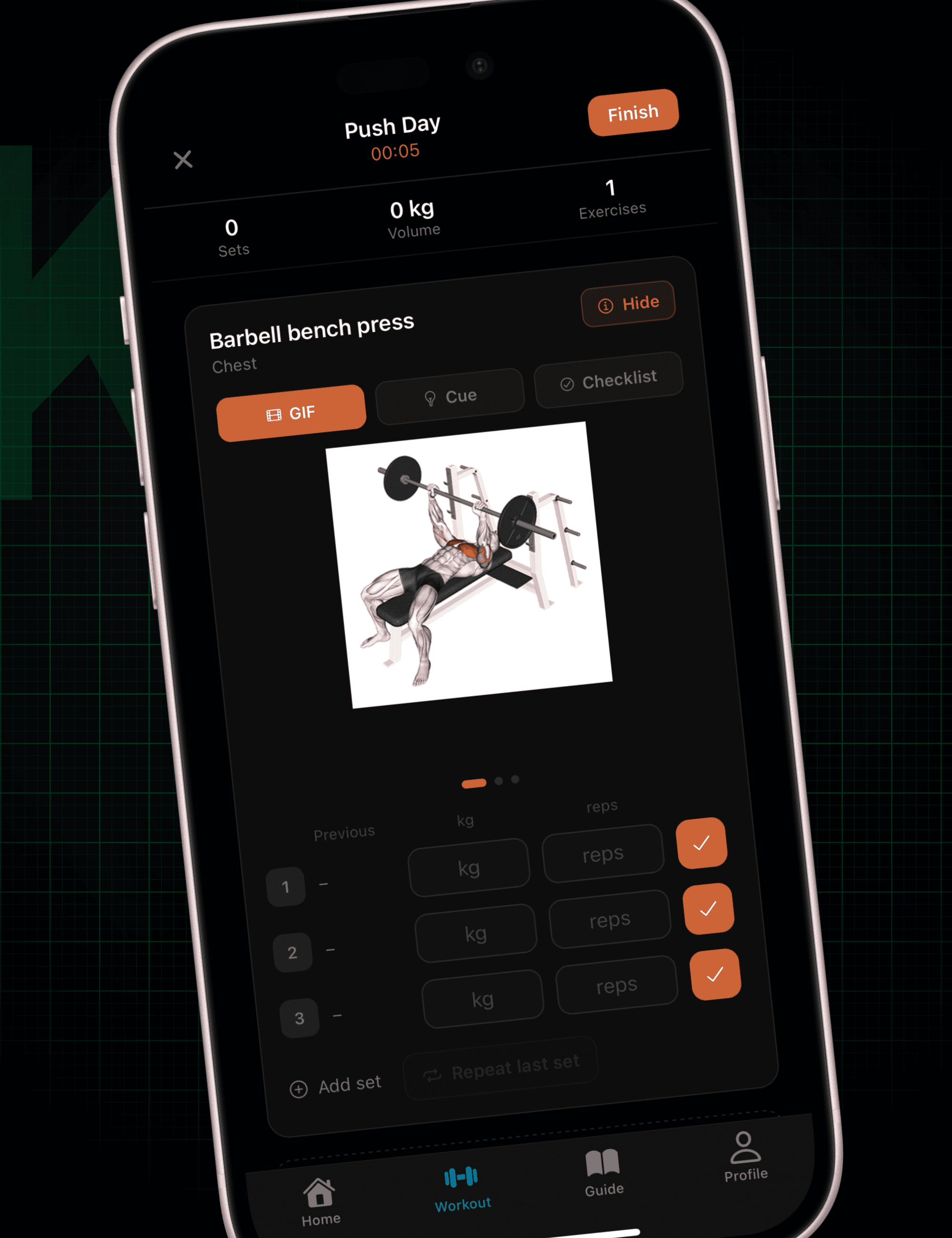
How Other Apps Compare
| Type of app | Finds imbalances? | Changes your training? | Example |
|---|---|---|---|
| Krato | Yes, from a photo | Yes, adds volume automatically | Krato |
| Body scan apps | Yes, measurements and body fat | No | Spren, Bodymapp, ZOZOFIT |
| Workout loggers | No, you count sets yourself | No | Hevy, Strong |
| Workout generators | No | Plans sessions, not weak points | Fitbod |
Body scan apps measure well, but you still have to design the fix yourself. Loggers and generators can track or plan your workouts, but they don't know what your body looks like, so they can't target what's lagging.
Frequently Asked Questions
What is the best app for muscle imbalances?
Krato is the best app for fixing muscle imbalances. Its body scan finds lagging muscle groups from a single photo, and it automatically adds training volume to those muscles in your workout plan. It's free on the App Store.
Can an app tell which muscles are lagging?
Yes. Body scan apps estimate your physique from your phone's camera. Krato goes further than most: it flags specific lagging muscle groups and adjusts your workouts to train them more.
How long does it take to fix a muscle imbalance?
Usually several weeks to a few months of consistent extra work, depending on how big the gap is and how well that muscle responds. Re-check every two to four weeks to track progress.
Should I train my weaker side more?
For left-right imbalances, use single-arm and single-leg exercises, start with your weaker side, and match its reps on the stronger side. That lets the weaker side catch up without the stronger side taking over.
Do muscle imbalances cause injury?
Large imbalances can change how you move and load your joints, so it's worth correcting them. But a small, normal asymmetry is not a reason to worry. Focus on balanced, consistent training rather than perfect symmetry.