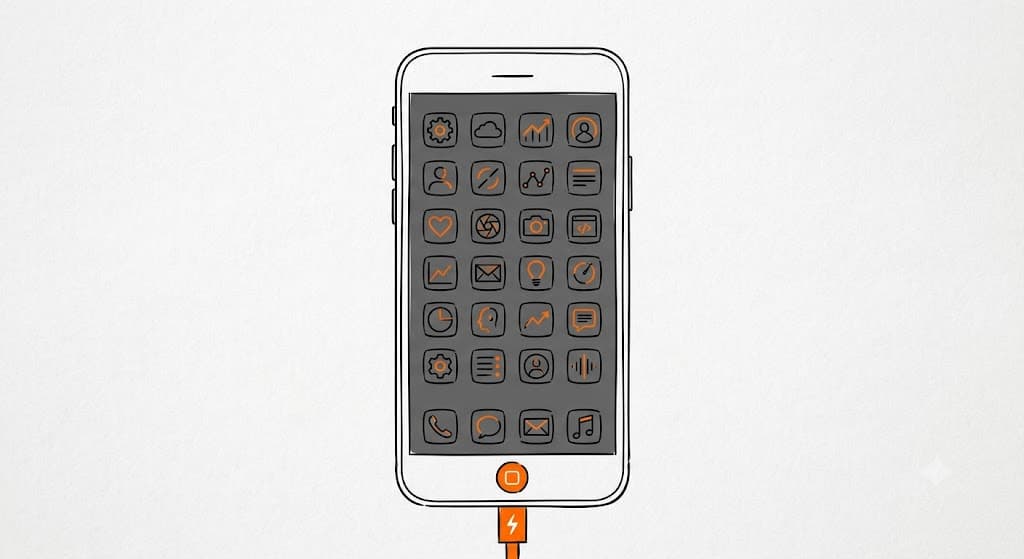
Walk into any gym in 2026 and you'll see it: people checking their phones between sets, not to scroll, but to log a rep, check their form cue, or see what their AI coach wants next. Artificial intelligence has quietly become part of the standard gym kit, right alongside a water bottle and a pair of lifting straps.
But "AI gym app" means very different things depending on which one you open. Some analyze your body composition from a photo. Some watch your squat depth through your camera. Others just quietly build you a smarter program than you'd write yourself. Here's how the category breaks down — and what actually matters in each.
There are four real categories of AI gym apps: body analyzers (track composition from photos), form checkers (catch bad reps via camera), program builders (adapt your training plan over time), and nutrition loggers (photo-based food tracking). Most people only need one or two — pick based on what's actually holding your progress back.
1. AI Body Analyzer Apps
These apps use your phone's camera to estimate body fat percentage, muscle mass distribution, and posture from a few photos — no calipers, no DEXA scan required. They're most useful as a trend line, not a single source of truth: take the same photo, in the same lighting, weekly or monthly, and watch the direction it moves. The exact percentage matters far less than whether it's trending the way your training says it should.
2. AI Form-Checking Apps
Point your camera at yourself mid-set and these apps flag bar path, joint angles, and depth in real time or after the fact. Good ones catch the injury-causing stuff early — knees caving on a squat, a rounding lower back on a deadlift — before it becomes a pattern your body has to unlearn.
3. AI Program Builders
This is the biggest category, and where Krato lives. Instead of a static PDF program, an adaptive plan looks at what you actually lifted last session — the weight, the reps, how it felt — and adjusts the next one. Progress isn't guesswork or a spreadsheet you forget to update; the app carries the context forward for you.
What separates a good one from a gimmick:
- It explains itself. You should know why a set was added or a weight dropped, not just see a number change.
- It gives you cues, not just numbers. A target of "3x8 squat" is less useful than a target plus the coaching cue that keeps your form honest at rep 7.
- It adapts within the session, not just between them. Missed your third set? A good program builder responds to that in real time.
4. AI Nutrition & Logging Apps
Photo-based food logging has gotten good enough that "just snap it" is a real workflow now, not a novelty. Paired with a training app, this closes the loop between what you're lifting and what you're fueling it with.
Where Krato Fits
Krato is built around category #3 — adaptive training — with the coaching layer built in rather than bolted on. Every exercise comes with expert cues so you're not just told what to lift, but how to lift it well. Routines evolve as you log sessions, so the plan you're on next month isn't the plan you started with — it's the one your progress actually earned.
If you're comparing AI gym apps, the honest advice is: use the analyzer for tracking, the form checker for safety, and the program builder for the actual training decisions. They're not competing with each other — they're solving different problems.
Every exercise comes with expert cues, and routines evolve as you log sessions — so next month's plan is the one your progress actually earned. Free on the App Store.
Try Krato Free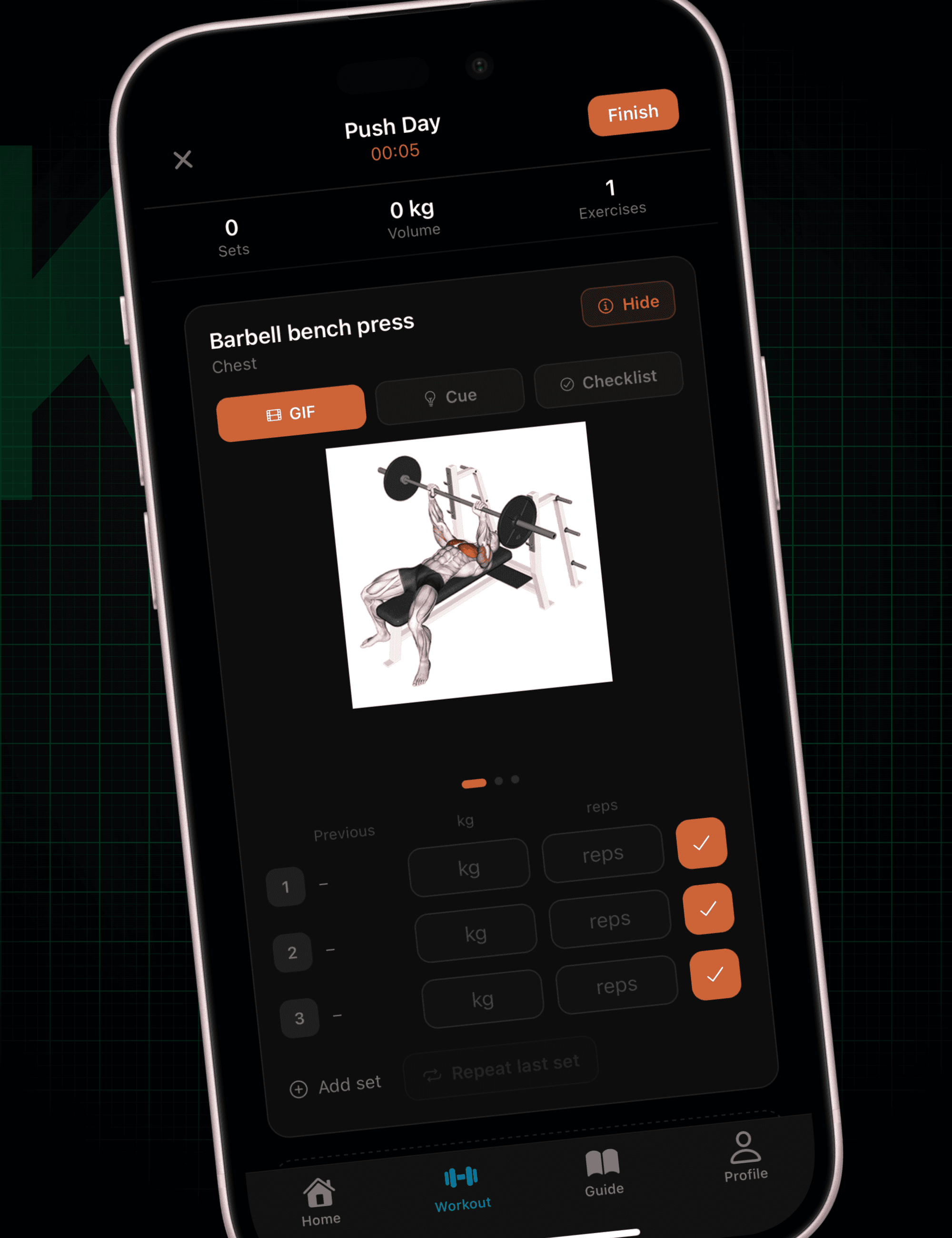
Krato adapts your plan session to session and gives you the cues to lift well, not just a number to hit. Free on the App Store.